



SESSION OVERVIEW
Every student experiences a digital environment differently. While a website may be technically accessible, the way information is presented can still create friction for students with different needs, preferences, abilities and levels of digital confidence.
This interactive session explores digital accessibility through a student experience and UX lens, asking a simple question: what if the digital experience adapted to the student, rather than expecting every student to adapt to it?
Using practical examples and live demonstrations, the session will explore how students can experience the same digital content very differently — and how features such as text-to-speech, translation, text and colour adjustments, reading and focus tools, and simplified content can give students greater choice and control over how they interact with information.
Rather than focusing on compliance or technical standards, the session will consider what accessibility actually feels like from the student’s perspective, and how small changes to the digital experience can remove unnecessary barriers to understanding, participation and connection.
Attendees will leave with a different way of thinking about digital accessibility: not simply as making a website accessible, but as creating a digital experience that is flexible enough to work for more students.
Ultimately, the session connects directly to the SENCON theme of “Belong” by exploring how giving students greater choice in how they access and experience digital information can help create a more inclusive student experience.
Session Outcomes:
Attendees will take away:
- A new perspective on the relationship between digital accessibility, user experience and belonging.
- An understanding that students can experience the same digital environment very differently, even when the content and information are identical.
- Practical ways to identify where a digital student experience may be creating unnecessary barriers, friction or cognitive load.
- A greater appreciation of the importance of choice, flexibility and personalisation in creating inclusive digital experiences.
- Questions and approaches they can use with their own teams when reviewing websites, communications and digital student services.
- A practical challenge to consider: are we designing digital experiences for the average student, or giving every student a genuine opportunity to participate in a way that works for them?
PRESENTER
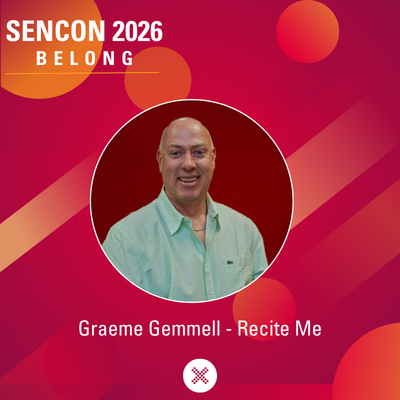
Graeme Gemmell is the Director and ANZ lead for Recite Me, a digital accessibility technology and services organisation helping businesses, government, education and community organisations create more inclusive and accessible digital experiences.
Graeme works with organisations across Australia and New Zealand to understand how people experience digital services in the real world, with a particular focus on the intersection between accessibility, user experience and inclusion.
Recite Me provides a comprehensive range of digital accessibility solutions and services, supporting organisations across both the user experience and the underlying accessibility of their digital estate. Its solutions include the Recite Me Assistive Toolbar, which allows users to personalise how they interact with digital content; Accessibility Compliance Checker, which identifies accessibility issues and provides actionable guidance; and PDF Accessibility Remediation, which helps organisations identify and remediate inaccessible documents at scale.
Recite Me also provides accessibility auditing and consultancy, documentation and accessibility statements, training and ongoing guidance to help organisations develop their internal accessibility capability.
With more than 5,000 organisations using Recite Me and millions of people using its technology, the organisation works across a broad range of sectors and digital environments.
For Graeme, the focus is not simply on whether a digital service meets a technical standard, but on whether people can successfully use, understand and engage with the experience. His work involves helping organisations consider accessibility from the perspective of the people they are trying to serve — including how different users may need different ways to access and interact with the same information.
Graeme is particularly interested in how this approach can contribute to more inclusive student experiences, where accessibility is considered not just as a technical requirement, but as an important part of participation, choice,
independence and belonging.